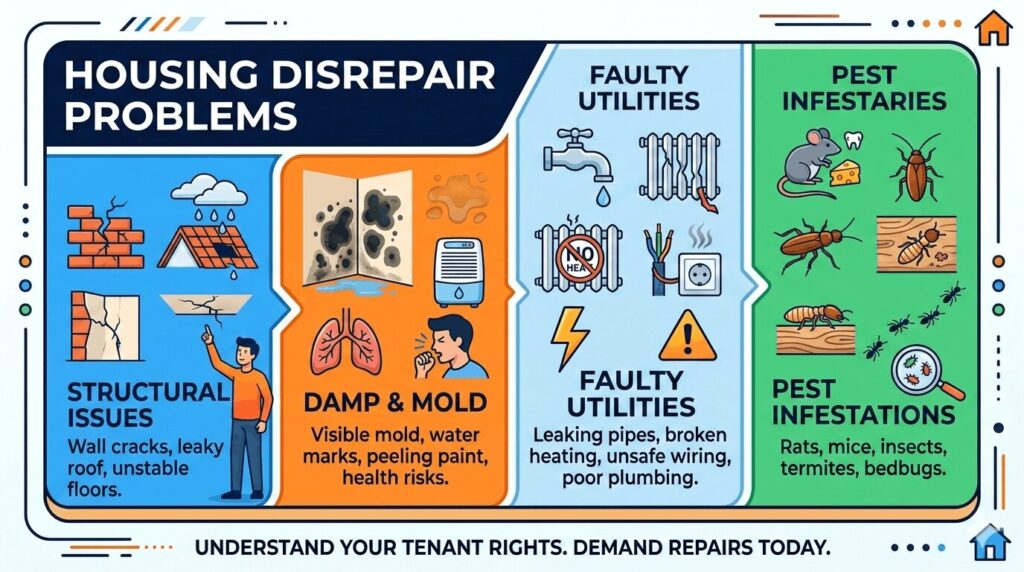
Tenants in Birmingham often face housing disrepair problems such as damp and mould, leaking roofs, broken heating systems, faulty plumbing, pest infestations, and unsafe electrical systems.
UK law requires landlords to maintain safe and habitable living conditions, but many tenants struggle to get repairs done quickly.
Understanding the most common housing disrepair issues, your legal rights, and how to take action can help tenants protect their health, safety, and finances.
If your landlord ignores repair requests, specialist support from Tenant Housing Disrepair can help you pursue a housing disrepair claim and potentially receive compensation.
Rental properties should provide tenants with a safe, comfortable, and healthy living environment.
Unfortunately, many tenants in Birmingham experience housing disrepair problems that landlords fail to address promptly. These issues can seriously affect health, safety, and quality of life.
Housing disrepair refers to situations where a landlord fails to maintain the property in a reasonable condition as required by UK housing laws.
From damp and mould to broken heating systems, these problems can escalate quickly if not resolved.
In this blog, Tenant Housing Disrepair explores the most common housing disrepair issues faced by tenants and explains what you can do if your landlord refuses to fix them.
1. Damp and Mould Problems
Damp and mould are among the most common housing disrepair issues reported by tenants.
These problems often occur due to:
- Poor ventilation
- Leaking pipes or roofs
- Structural problems
- Inadequate insulation
Exposure to damp and mould can lead to respiratory problems, allergies, and other health concerns.
If a landlord fails to address persistent mould or damp, tenants may have the right to make a housing disrepair claim.
2. Leaking Roofs and Structural Damage
Another major issue tenants face is structural damage within the property.
Examples include:
- Leaking roofs
- Cracks in walls
- Loose tiles or bricks
- Damaged ceilings
These issues can lead to water damage, electrical hazards, and further deterioration of the property.
Landlords are responsible for maintaining the structure and exterior of the property, including roofs, walls, and windows.
If these problems are ignored, tenants may be entitled to compensation.
3. Broken Heating or Boiler Issues
Heating problems are particularly serious during colder months.
Common heating issues include:
- Faulty boilers
- Broken radiators
- Lack of hot water
- Inconsistent heating systems
Landlords must ensure that heating and hot water systems are functioning properly. Living without heating can make a property unsafe and uncomfortable, especially for families with children or elderly residents.
When landlords fail to repair heating systems in a reasonable timeframe, it may qualify as housing disrepair.
4. Plumbing and Water Leaks
Faulty plumbing can cause significant inconvenience and damage to rental properties.
Typical plumbing issues include:
- Burst pipes
- Leaking sinks
- Blocked drains
- Constant water leaks
If plumbing problems are left unresolved, they can cause flooding, damp conditions, and damage to furniture and belongings.
Tenants should report these issues to landlords immediately and keep records of all communications.
5. Electrical Hazards
Electrical faults pose serious safety risks to tenants.
Examples of electrical hazards include:
- Exposed wiring
- Faulty sockets
- Flickering lights
- Unsafe fuse boxes
Landlords are legally required to ensure that electrical installations are safe. Ignoring electrical issues can increase the risk of fires or electric shocks.
If your landlord fails to repair electrical hazards, seeking legal advice may be necessary.
6. Pest Infestations
Pest infestations can quickly turn a rental property into an unhealthy living space.
Common infestations include:
- Rats
- Mice
- Cockroaches
- Bed bugs
In many cases, infestations occur due to structural issues, poor waste management, or gaps in walls and floors.
If the infestation is caused by property conditions rather than tenant behaviour, landlords are usually responsible for resolving the issue.
7. Broken Windows or Doors
Damaged windows or doors can affect both safety and energy efficiency.
Problems may include:
- Broken locks
- Cracked windows
- Doors that do not close properly
These issues can increase the risk of burglary and make it difficult to keep the property warm.
Landlords have a duty to maintain secure and functional doors and windows.
What Should Tenants Do If Repairs Are Ignored?
If your landlord refuses to fix serious issues, tenants should take the following steps:
- Report the problem in writing to the landlord.
- Keep photos and evidence of the damage.
- Record all communications and repair requests.
- Contact the local council if the issue affects health or safety.
- Seek legal advice from housing disrepair specialists.
Taking early action can prevent the problem from becoming worse and strengthen a potential claim.
FAQs
Q: What is considered housing disrepair?
A: Housing disrepair refers to situations where a landlord fails to maintain the property’s structure, heating, plumbing, or safety systems.
Q: How long does a landlord have to fix repairs?
A: Landlords must carry out repairs within a reasonable timeframe. Emergency issues such as heating failures or major leaks should be addressed quickly.
Q: Can tenants claim compensation for housing disrepair?
A: Yes, tenants may be entitled to compensation if their landlord fails to repair serious issues that affect health, safety, or quality of life.
Q: Do I need evidence for a housing disrepair claim?
A: Yes. Photos, repair requests, emails, and medical reports can all support a housing disrepair claim.
Q: Can I make a claim while still living in the property?
Yes. Many tenants pursue housing disrepair claims while continuing to live in the property.
Get Help from Tenant Housing Disrepair
If you are living in unsafe or poorly maintained housing, you do not have to deal with the situation alone.
Tenant Housing Disrepair helps tenants understand their legal rights and take action against landlords who fail to carry out necessary repairs.
Our team can guide you through the process of making a housing disrepair claim and help you pursue the repairs and compensation you deserve.
Take the First Step Today
If you are experiencing housing disrepair problems, contact Tenant Housing Disrepair today for expert advice and support. Your home should be safe, comfortable, and properly maintained-and we are here to help make that happen.